New Client? Enjoy Your First Comprehensive Exam for Just $35!

When Your Pet Feels Off, We’re Ready to Find Answers
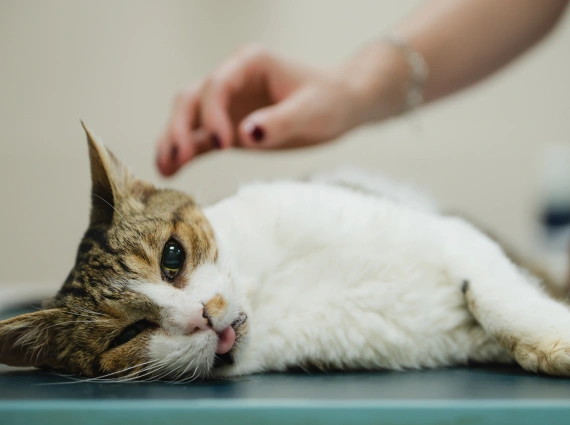
Our doctors and staff are here for your pet when they aren’t feeling their best. Our facility is equipped with in-house laboratory, digital radiography, ultrasound and more to help us quickly and accurately diagnose a wide variety of issues that your pet may be suffering from.
Laboratory Services
Our laboratory services allow us to perform advanced medical testing so we can diagnose patients in a timely manner. Testing may be performed in-house or sent to a trusted reference laboratory, depending on your pet’s specific needs. This is especially helpful when dealing with injury or illness, as well as for routine blood work and fecal testing during wellness exams.
Laboratory test results provide us with the ability to maintain a consistent record of your pet’s baseline health and growth. With this information, we are often able to detect diseases and illnesses early and respond promptly with appropriate treatment.
Examples of In-House Laboratory Tests:
- Complete Blood Count: Can screen for things like infection, inflammation anemia or low platelet levels.
- Blood Chemistry Panel: A combination of various tests that screen for changes in vital organs—including the kidneys, liver, and pancreas—as well as certain hormone imbalances.
- Electrolyte Panel: Measures the levels of sodium, potassium, and chloride to see if there are any chemical imbalances in the body.
- Urinalysis: Assesses kidney function, and can also detect infections, crystal formation, or diabetes.
- Fecal Test: Looks for intestinal parasites excreted in the feces of your pet. Please remember to bring a fresh stool sample for every wellness visit. We typically send these tests to an external laboratory for the centrifugation method.
Pet X-Rays
Here at Riverbend Veterinary PetCare Hospital, we are proud to offer digital x-ray technology to diagnose problems and treat our patients quickly. Radiology is especially important as it allows our medical team to non-invasively examine the organs like the lungs, heart and liver, as well as the intestinal tract and the skeletal system for abnormalities. Additionally, our x-rays are sent to a board-certified veterinary radiologist for evaluation.
The X-ray can be used to diagnose a number of different conditions, including bone fractures, tumors, structural abnormalities, and foreign objects. It should also be noted that only a small, harmless amount of radiation is emitted during the process.
In addition, digital radiology allows for better accuracy, higher resolution, and is overall more efficient than film x-rays. This allows our team to serve clients and patients efficiently by allowing us to diagnose a problem, quickly take steps to treat it, and easily share and store digital images across the veterinary team.
Non-Invasive Heart and Abdominal Scans
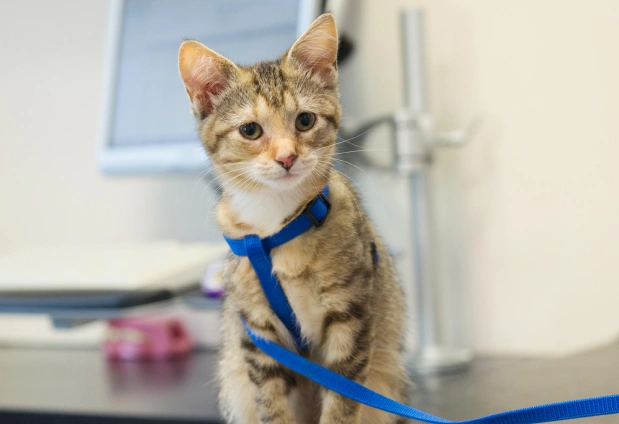
At Riverbend Veterinary PetCare Hospital, we offer in-house ultrasound services to diagnose various health conditions in pets. Ultrasound can be used to assess organs like the heart, liver, kidneys, spleen, and intestines, as well as detect pregnancy. The procedure is non-invasive and typically performed with mild sedation. Some fur may be shaved to ensure clear imaging, and pets are positioned comfortably on their side or back.
Our team works closely with board-certified specialists through SonoPath to ensure accurate interpretation of the results.
Allergy Testing
Allergies and dermatitis can cause serious problems and discomfort for pets. Dermatitis is a broad term used to describe numerous issues related to the skin. There are many agents that can trigger dermatitis, such as infection, allergens, disease, and environmental factors. The likelihood of your pet having dermatitis is largely based on genetic predisposition.
Allergens are everywhere and there is no way to avoid them completely. The most common allergens for pets include pollen, grasses, flowers, grains, household cleaning products, and perfumes. When dermatitis is left untreated, it can lead to physical discomfort in your pet and even cause mental distress. With the help of our medical team, we identify and manage common causes of skin issues, including environmental and food allergies. Household cleaners and perfumes don’t typically cause skin problems, but they can aggravate asthma in cats. We’ll guide you in protecting your pet’s skin and respiratory health.
Some common signs that your pet may have dermatitis are listed below. Should your pet appear to be experiencing any one of these symptoms at any time, we highly recommend that you call us to schedule an appointment.
- Inflamed or itchy skin
- Excessive licking, shedding, biting or itching
- Bumps or lumps on the skin
- Watery eyes
- Restlessness
If your pet experiences any of these symptoms, please schedule an appointment right away. We begin the appointment with a physical examination and visually assess the skin, coat, and nails. We will also discuss the physical symptoms you have observed in your pet, as well as any behavioral changes.
The second step is to run diagnostic tests with our in-house laboratory. This could include checking the surface of the skin or ears for infection, skin scrapes or even blood work. Using the results of the testing, we will have an understanding of your pet’s condition and will discuss treatment options with you.
Finally, some pets may require an evaluation with a Board Certified Veterinary Dermatologist. We will facilitate a referral to those specialists.
